
BURJ KHALIFA HISTORY
The Story of Burj Khalifa
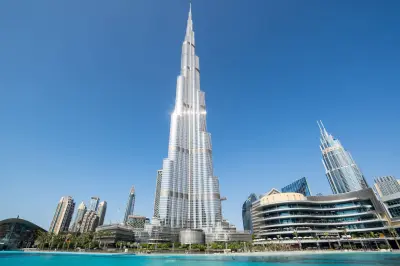
The Burj Khalifa is the tallest building in the world, standing at 828 meters tall. The impressive skyscraper, located in Dubai, United Arab Emirates, was completed in 2010 and symbolizes the city’s fast transformation into a global metropolis. When the project started in 2004, the site was mostly empty land with only a few buildings.
Designed by architect Adrian Smith, the building has 163 floors and includes residential, office, and hotel spaces. The tower is surrounded by offices, restaurants, shops, and is close to other attractions like the Dubai Mall, Burj Al Arab and Palm Jumeirah. The building features several observation decks, some of the world’s fastest elevators and an impressive lighting system. The Burj Khalifa was designed to be the center of large-scale, multi-purpose development, marking a new phase of innovative design and urban growth in Dubai.

How did it all begin?
The idea for the Burj Khalifa came from Dubai’s goal to become a global center for business and tourism. The project was designed to symbolize the city’s rapid growth and modernization, with the aim of making the tower the tallest building in the world to show Dubai’s expansion and ambition. Construction of Burj Khalifa began in 2004, with architect Adrian Smith of the architectural company Skidmore, Owings & Merrill designing a building that blends modern style with Islamic influences.
Part of a large-scale development that includes homes, hotels, and the Dubai Mall, the Burj Khalifa represents Dubai’s shift from an oil-based economy to one focused on tourism. The tower was initially called Burj Dubai but was renamed Burj Khalifa in 2010 to honor the UAE’s former president, Sheikh Khalifa bin Zayed Al Nahyan after the government provided financial support during the 2007-2008 global recession.

Design
The Burj Khalifa’s design blends modern and Islamic influences. Islamic architectural styles like the Great Mosque of Samarra inspire its Y-shaped floor plan. The building combines sleek, modern lines and geometric patterns from traditional Islamic architecture, giving it a futuristic look. The tower includes 27 setbacks that reduce in size as the tower rises, which helps reduce wind vibrations. At the top, there is a 200-meter spire made of over 4,000 tonnes of steel, which supports communication equipment. Without the spire, the tower would still be 585 meters tall.

How long did it take to build Burj Khalifa?
The construction process lasted six years, beginning with excavation in January 2004. The foundation, made of reinforced concrete, was completed after about a year, and by 2007, the 100th floor was finished. The spire was completed in 2009, reaching the tower’s full height of 829.8 meters. The exterior was also finished in 2009, and the tower officially opened in January 2010. The first residents moved into the Armani Residences in February 2010, though other areas were still under construction. The building was constructed using 330,000 m³ of concrete and 55,000 tonnes of steel rebar, with construction taking 22 million hours of labor. Around 12,000 workers were employed on the project at its peak, mostly from South And East Asia. The major milestones in the construction of the Burj Khalifa included surpassing the Sears Tower and Taipei 101 by 2007 and reaching its full height in January 2009. Upon its official opening in January 2010, the Burj Khalifa became the world’s tallest building.

The cost of Burj Khalifa
The cost of building the Burj Khalifa came to around $1.5 billion, making it one of the world’s most expensive buildings. Its completion coincided with the Great Recession and overbuilding in Dubai, leading to high vacancy rates. Struggling with debt, Dubai received bailouts from Abu Dhabi. During the opening ceremony, the tower was renamed Burj Khalifa to honor UAE President Khalifa bin Zayed Al Nahyan for his support.
The features
The building has 57 elevators, including the world’s fastest double-deck elevators, and 2,909 stairs up to the 160th floor. It also includes 24,348 windows and more than 1,000 pieces of art.
The Burj Khalifa houses 900 private residential apartments, office spaces, hotels, and restaurants. The 43rd and 76th floors have swimming pools, and the 122nd, 123rd, and 124th floors feature a sky lobby, restaurant, and observation decks. The Dubai Fountain at the base is one of the world’s largest dancing fountains. It is designed with energy-efficient systems, such as a cooling system, to regulate the desert heat. Its impressive lighting system includes thousands of lights illuminating the building at night.
Observation decks
The Burj Khalifa’s observation decks offer stunning views from the 124th, 125th, and 148th floors. The “At the Top” deck opened in 2010 at 452 m, followed by the 148th-floor “SKY” level at 555 m in 2014, and “The Lounge” at 584 m in 2019, becoming the highest lounge in the world. Visitors enjoy panoramic views of Dubai’s skyline, desert, and the Persian Gulf, with landmarks like Palm Jumeirah, Dubai Marina, and Burj Al Arab visible on clear days. The 124th-floor deck features an electronic telescope for real-time and saved views, and on clear days, you can see the shores of Iran, 153 km away.

Opening of Burj Khalifa
The Burj Khalifa officially opened on January 4, 2010, and the event was broadcast live globally. The Ruler of Dubai, His Highness Sheikh Mohammed Bin Rashid Al Maktoum, inaugurated the world’s tallest tower. Around 6,000 guests attended, with 10,000 fireworks, light beams, and sound and water effects. The lighting, designed by Speirs and Major Associates, used 868 strobe lights and over 50 effects, creating a spectacular show on the tower’s facade and spire.

Records
The Burj Khalifa is recognized for numerous world records, including:
- Tallest existing structure: 829.8 m
- Most floors in a building: 163
- Highest elevator installation
- Longest travel distance for elevators: 504 m
- Highest vertical concrete pumping: 606 m
- Tallest building with residential space
- Highest aluminum and glass facade installation: 512 m
- The highest restaurant (At.mosphere) on the 122nd floor at 442 m
- Highest New Year’s Eve fireworks display
- The largest light and sound show performed on a single building

Iconic events and stunts
The Burj Khalifa hosts the annual Emaar New Year’s Eve celebration with fireworks, light shows, and fountain displays. The event, launched in 2010, has set Guinness records and is broadcast worldwide. The tower has also been the site of BASE jumping records, including jumps from 650 meters in 2008, 672 meters in 2010, and 828 meters in 2014. In 2011, French rock climber Alain Robert climbed the tower, using safety gear to reach the top in six hours.
Burj Khalifa in movies
The Burj Khalifa appears in several movies and series, including Mission: Impossible – Ghost Protocol (2011), where Tom Cruise appears climbing and descending the building. It is also seen in Independence Day: Resurgence (2016), The Amazing Race, and Will Smith’s Best Shape of My Life (2021), where he climbs the whole tower to show its size.
Awards
Burj Khalifa has won numerous awards, including Best Tall Building in the Middle East & Africa in 2010 and Excellence in Engineering from ASHRAE in 2011. It is also recognized for its innovative design, receiving awards like the International Architecture Award and Project of the Year from MEED.
Explore the tallest building in the world with one of our popular tours!

Hotel Pick-up
Burj Khalifa Small-Group Guided Tour
Join our small group tour for an exciting Dubai adventure, starting with skip-the-line access to the Burj Khalifa - the world's tallest building. Enjoy hotel pick-up and the assistance of a professional guide as you ride the fastest elevator to the 124th floor, where you'll enjoy stunning views through floor-to-ceiling glass windows. The tour also includes visiting the Dubai Museum, Souk Madinat, a traditional gold and spice market, and a scenic water taxi ride.

Pick-up, transport & customizable itinerary
Burj Khalifa VIP Tour
Skip the lines with exclusive access through a separate VIP entrance and enjoy priority entry to the Burj Khalifa’s observation decks on floors 124, 125, and the exclusive Level 148. Relax with refreshments at the lounge while receiving personalized attention from our expert guide. Learn about Burj Khalifa's architecture and design and enjoy the stunning panoramic views of Dubai’s skyline, desert, and the Arabian Gulf from Level 148, the highest observation deck in the world. Travel in luxury with private transfers to and from the Burj Khalifa for a comfortable experience throughout your visit.